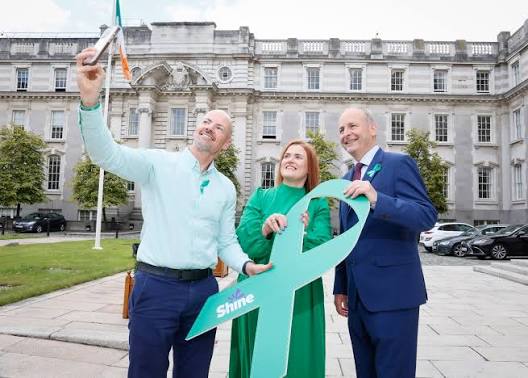
AMLÉ were delighted to attend the online launch of this year’s Green Ribbon Campaign run by Shine in late August. The campaign runs for the month of September with the aim of reducing mental health stigma in Ireland.
AMLÉ have been a supporter of the campaign for a number of years, supporting work to get green ribbons and bracelets into as many fresher’s packs as possible, and including a green ribbon in every self-care pack distributed during campus visits by the AMLÉ mental health programme throughout the year.
Stigma is a negative and often untrue belief of label held by society or individuals about a specific trait, behaviour, or person. Mental health stigma can often prevent people seeking help and can prevent them from living their fullest life.
Some common stigmatising beliefs include that people with mental health are broken in some way, that they are weak, that they are dangerous, and that they are just looking for attention.
Other mechanisms of stigmatising is through language use. For example, when we are talking about someone with a smaller body size and we say something like ‘they’re anorexic!’, or when we are talking about being organised and we say something like ‘I’m so OCD‘, we unintentionally stigmatise people with those diagnoses.
What can we do to break down stigma?
- We can signify to others that we are open to conversations about mental health, and that we’re committing to working to reduce stigma by wearing a green ribbon or bracelet.
- We can be more careful in our language usage.
- We can educate ourselves more on what stigma is and how it can impact people.
- We can be aware that chances are someone in your life is struggling with mental health, and we can be sure to check in on them and support them so that they are less likely to feel stigma.
Self-stigma is also a big issue. We asked students last year some questions about stigma as part of a wider study on student mental health. 36.9% of participants told us that they would be afraid to get help for their mental health because of how others might treat them, and 30.5% told us that they would be embarrassed to need help for their mental health. However, those questions related to the individual themselves; when we asked more generally, 80.4% of participants don’t think it’s a sign to need help with mental health, which means that this is self-stigma at play, where people think ‘it’s ok for other people to need help but it’s not ok for me to need help’. This is simply an untrue self-stigma.
The most successful way of dealing with mental health struggles is to talk about it. If you are a student, you can access free mental health help, confidentially, on campus. You can just get in touch with your on-campus counselling service and book an appointment. You don’t need to have a diagnosis, or be in crisis, or even be sure why you’re feeling how you’re feeling to do that.
When you are struggling with mental health difficulties, sometimes your brain can amplify stigmatising thoughts – it might tell you that you don’t deserve help, or that you just need to get over it yourself, or other similar thoughts. Those thoughts are untrue – asking for help is one of the strongest things anyone can do, and you deserve that help. For sources of help for your mental health, reach out to your student’s union, your counselling service on campus, or see here for a list of NGOs that provide help for free.
Recent Comments