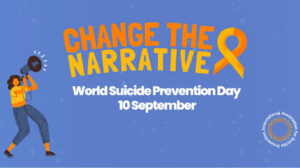
Last month we took part in marking World Suicide Prevention Day. The theme for this year was Changing The Narrative, which aimed to challenge harmful myths, reduce stigma and to foster open, compassionate conversations about suicide.
Suicide prevention is everyone’s business. That means it’s important for each and every one of us to play our part in suicide prevention, and even though we aren’t mental health professionals there are still many things we can do to play our part.
For example, a simple thing we can do is to watch our language. Stigma is often unintentionally perpetuated when we use certain phrases or words. Have you ever said, or heard someone say ‘Oh, I’m so OCD’, or ‘She’s so skinny, she’s anorexic!’? We don’t mean to, but we are stigmatising people with OCD or Anorexia by reducing them to a stereotype.
Similarly, to say that someone ‘committed suicide’ is also stigmatising. This is because in Ireland before 1993, it was a crime to die by suicide, and the word ‘commit’ also has strong ties to the religious notion of committing a sin. Therefore when we say that someone committed suicide, there is an implication that they are a sinner or even a criminal. Instead it is best to say that someone ‘died by suicide’ or ‘took their own life’.
It’s important as well not to be afraid to say the word suicide. Some people worry that by saying the word, it might give someone the idea to die by suicide. In fact, the opposite is true. If you know someone is struggling and you ask fi them if that have been thinking about suicide, one of two things will likely happen. Either they haven’t and you can find other ways to support them, or they have thought about it. If they have they will likely feel safer to admit that as you have indicated you’re a safe person to talk to by saying the word when you asked the question. This means that they will be more likely to talk to you about it, and you can better know what is going on for that person and how best to support them.
The best way to know how to support someone who might be having suicidal thoughts is to take suicide prevention training. There are three free options available:
- Let’s Talk About Suicide is a free online 1 hour training that covers the basics.
- safeTALK is a 3 hour in person training that goes into more depth
- ASIST is a 2 day in person training that give the highest level of suicide prevention training.
You can find out more about the training here.
This training give you the skills to have a conversation and get the right help for that person. It doesn’t make you responsible for saving that person’s life, it just helps you to feel more confident in knowing what to do should you find yourself in a conversation with someone who is feeling suicidal.
Recent Comments