
We have been working to analyse the data on student mental health from our recent study, and we would like to share some of the initial findings – a report on these can be found here: https://mentalhealth.amle.ie/amle-research/.
Overall, almost of all participants (48%) said that they had problems with their mental health over the past 12 months often or all of the time. However, the mean wellbeing score was also fairly high with an average score of 22.6 out of a possible range of 7 – 35.
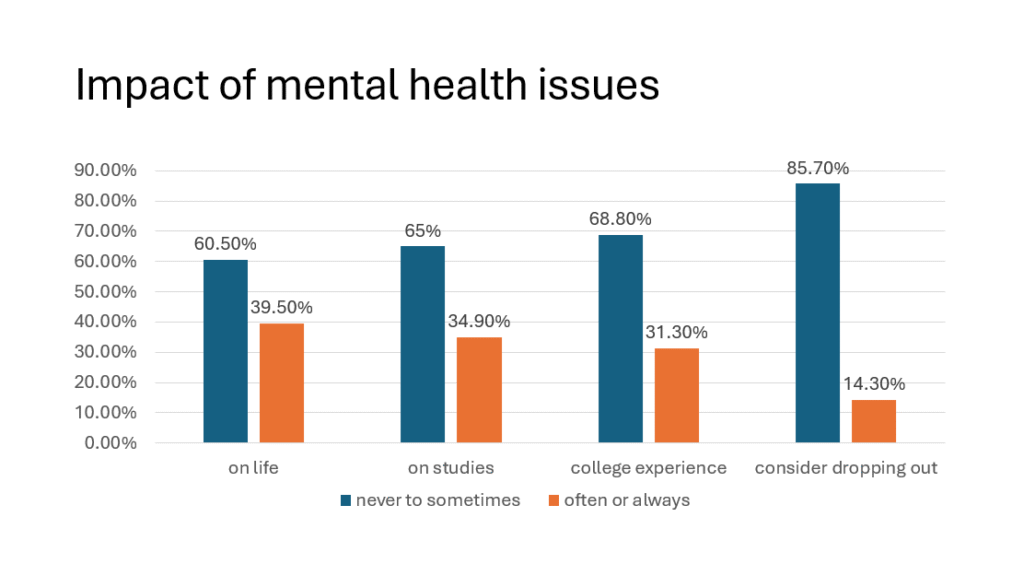
The impact of participants’ mental health on various aspect of their lives is apparent:
- 40% said that their mental health impacts their life often or always
- 35% said that their mental health impacts their studies often or always
- 31% said that their mental health impacts their college experience often or always, and
- 14% said that their mental health has made them consider dropping out often or always.
27% of participants say they are lonely often or all of the time, which is slightly less than the last available data (USI, 2019: https://mentalhealth.amle.ie/research/, and similarly 22% say they don’t have anyone to talk to about their problems.
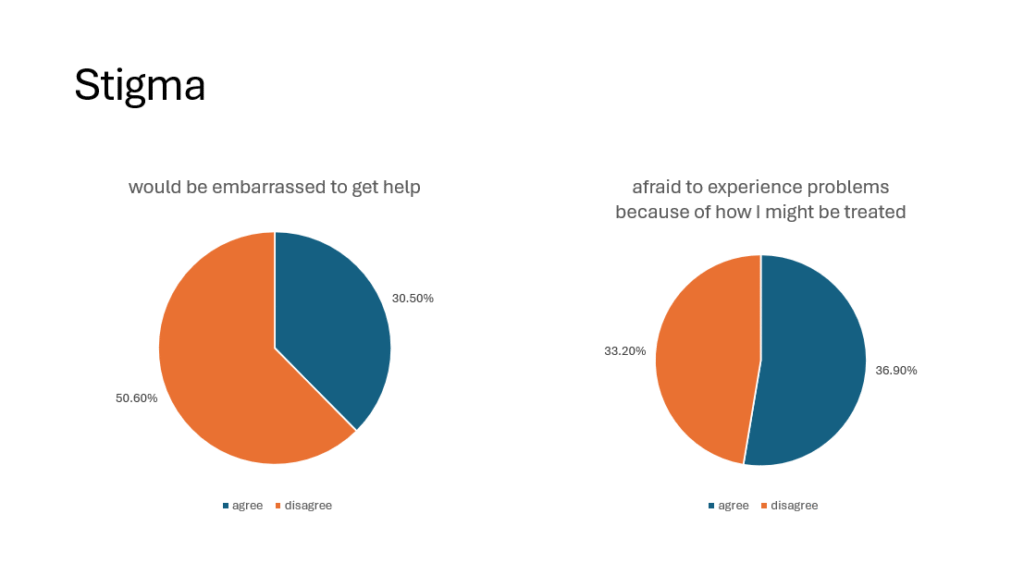
A concerning set of findings from this study relate to stigma:
- 31% of participants said they they would be embarrassed to get help
- 37% of participants said they would be afraid to experience problems because of how they might be treated, and
- 7% said they think it is a sign of weakness to need help
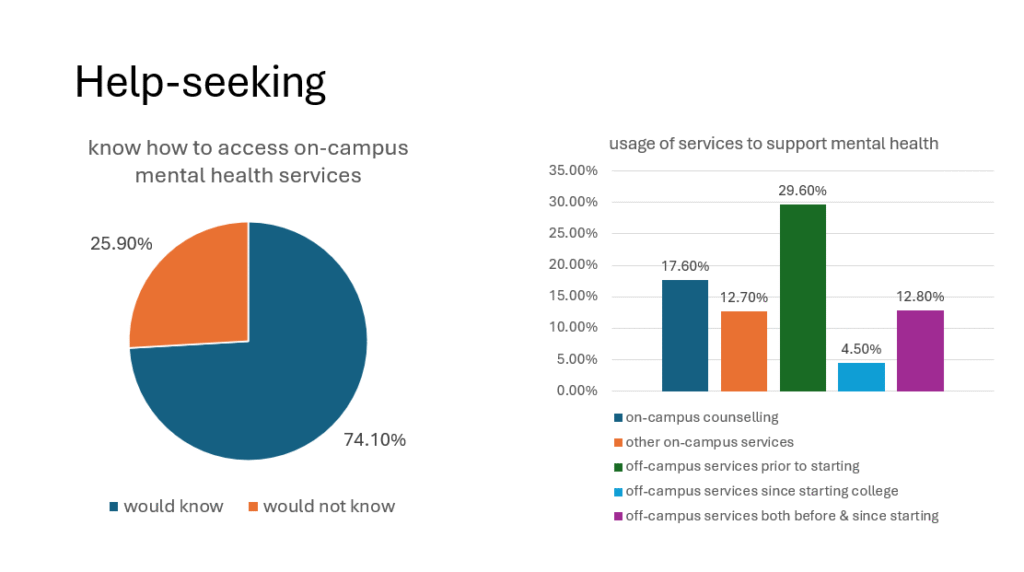
Knowledge of help-seeking was high, with 74% knowing where to get help if they or their friend needed it, and usage of services was fairly widespread between on-campus counselling, other-on campus services, and off-campus services.
Overall, while student mental health appears poor, and impacts a wide range of aspects of student life, participants’ wellbeing is also fairly high. Stigma is an area of concern, as is loneliness and isolation, although help-seeking seems widespread. Further work and campaigning is needed in these areas to incite change.
Notes:
This study was funded by the Gambling Regulatory Authority of Ireland, and was conducted in partnership with Dr Elaine Murray in Ulster University. The study is not nationally representative due to sample size.

Recent Comments