
Movember was started in 2003 when 30 men grew moustaches without shaving through the month of November to highlight men’s health issues.
Why do we need to highlight men’s issues though? Because relative to other genders, men struggle with their health and do not seek help.
For example, in the 2019 USI Student Mental Health Report, 43.2% of male participants said they had struggled with their mental health often or all the time across the previous year., However, when we asked about seeking help, 29.6% of males said they were unlikely to extremely unlikely to seek help from anyone outside of college for their mental health; and 42.8% were unlikely to very unlikely to see help form anyone inside college for their mental health.
In terms of supporting one another, 25% said they had nobody to talk to, but 86.8% said they would feel confident in talking to a friend about their mental health.
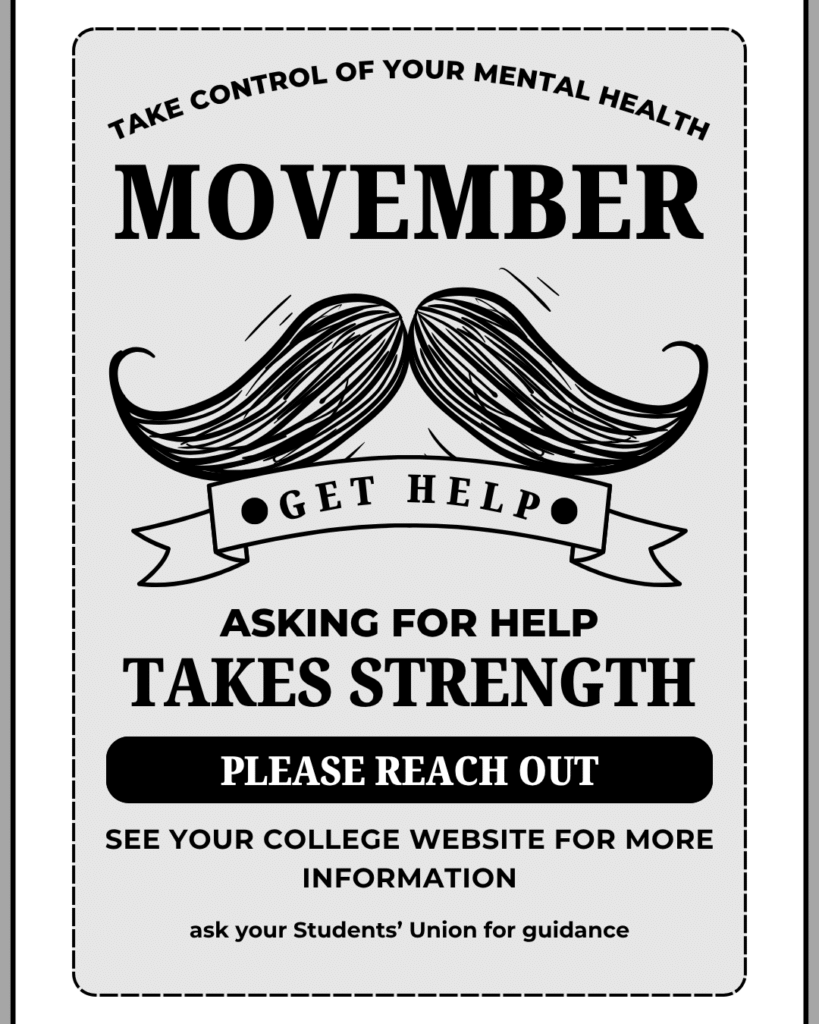
So what does all that tell us? What’s the TL:DR? Essentially male students in Ireland are suffering with their mental health but not seeking help; however, they are very eager to support their friends.
We all know the phrase ‘it’s ok to be not ok, and it’s ok to ask for help’. It can sometimes feel reading this like that’s a general statement, and in some ways it is, but if you are a male reading this, it means you. Yes you. If you are not feeling ok, that’s ok. Its ok for you to ask for help.
There’s a lot of toxic narrative still around about how it’s weak to show your feelings or to ask for help, or that you need to ‘man up’ and ‘be strong’.
In reality, one of the bravest and strongest things anyone can do, regardless of gender, is to open up to someone about their emotions, to say ‘actually, I’m not doing alright, and I need help – can you help me?’
You don’t need to wait until you’re in a crisis – the earlier you get help for your mental health, the sooner you’ll be feeling more like yourself. Recovery from most mental health issues is entirely possible, and a key part of almost every recovery story is talking about how you’re feeling.
Think about that statistic – nearly half of all male students are really struggling. Think of your mates – half of them are struggling. Imagine if you all felt like you could talk about it, instead of half of them again feeling like there was nobody to talk to? Now imagine if you told them about how you are struggling, but you’re getting help. Imagine how much less alone you might all feel, how supported to know it’s a safe thing to talk about? That’s real courage, real strength right there.
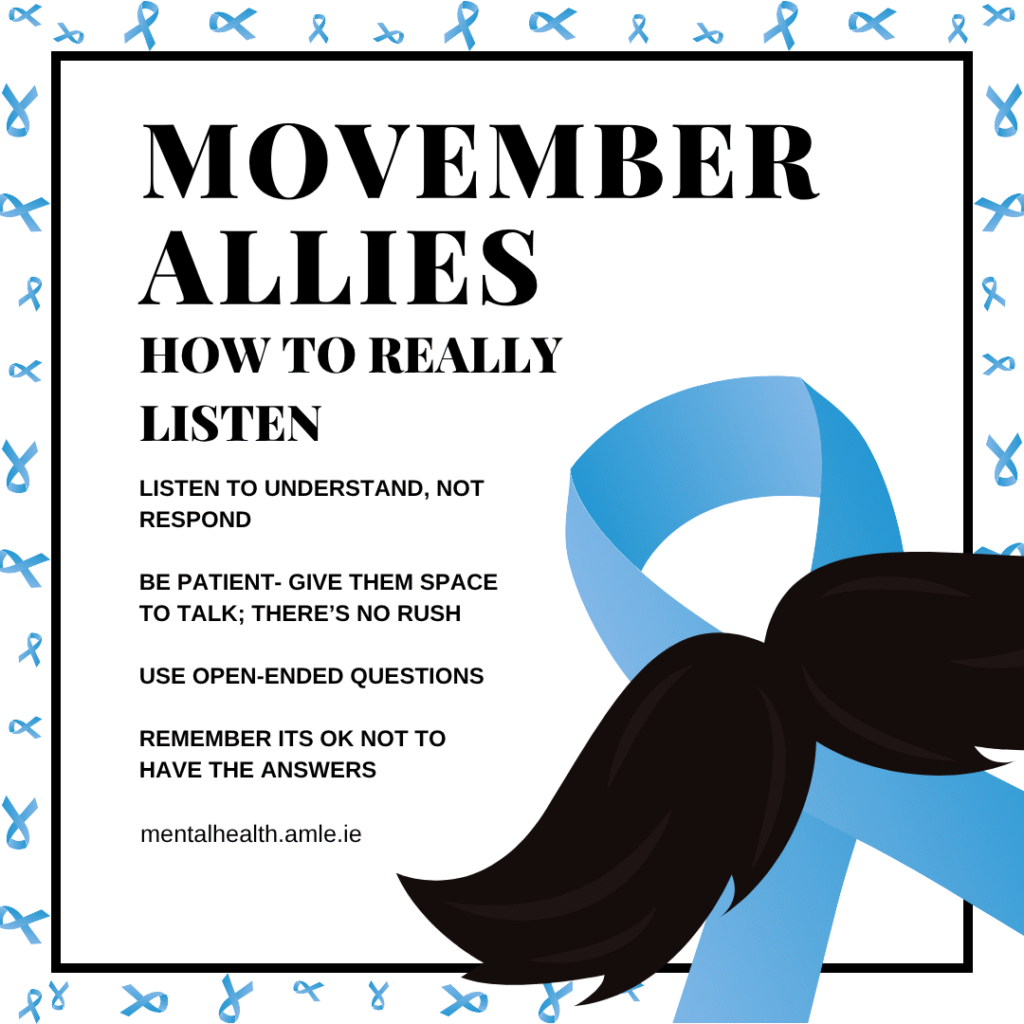
Maybe you’re reading this and you’re someone who has never struggled with your mental health. You can still play a key role here – you can ask your mates how they’re doing, and really mean it. Listen when your mates talk to you. Find out where help is available in case they or you ever need it. You can also get trained in suicide prevention so that if someone ever does tell you that they’re struggling to the point where they’ve thought about ending their life, you know what to say and do. You can access a free, online, short training here.
If you need any help with your mental health, or you know someone who does, sources of support are available on campus via your Students’ Union or counselling service, or here. Reaching out might be the bravest thing you ever do.

Recent Comments